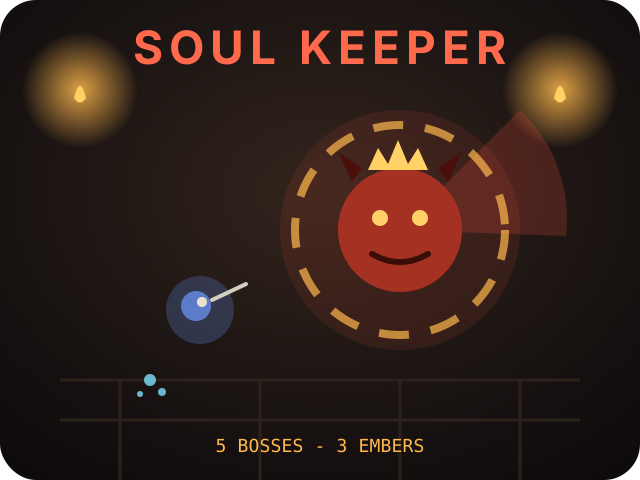
 Adventure
Soul Keeper
Duel five bosses in a torch-lit arena with a stamina bar, roll i-frames and three flasks; death drops your souls where you fell, and three deaths end the run.
HardPlays here
SonoTap guide
Compare three boss rush browser games by their actual mechanics and goals. Read practical strategy, learn the differences and choose your next session.
AdventureDuel five bosses in a torch-lit arena with a stamina bar, roll i-frames and three flasks; death drops your souls where you fell, and three deaths end the run.
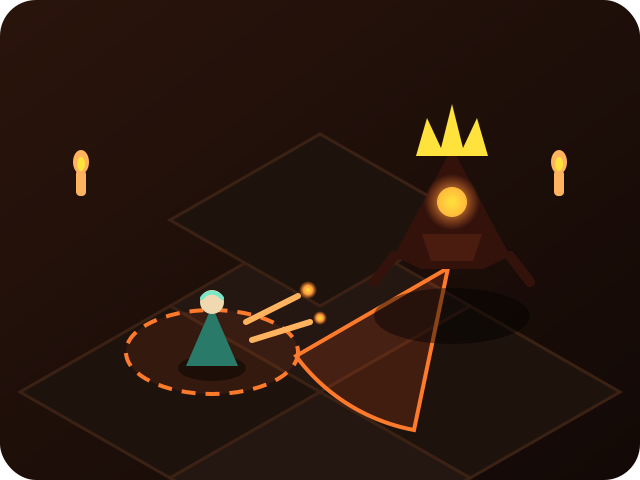 Arcade
Dodge telegraphed attacks across five sequential bosses in an isometric ember ruin, drafting a stacking relic after every kill.
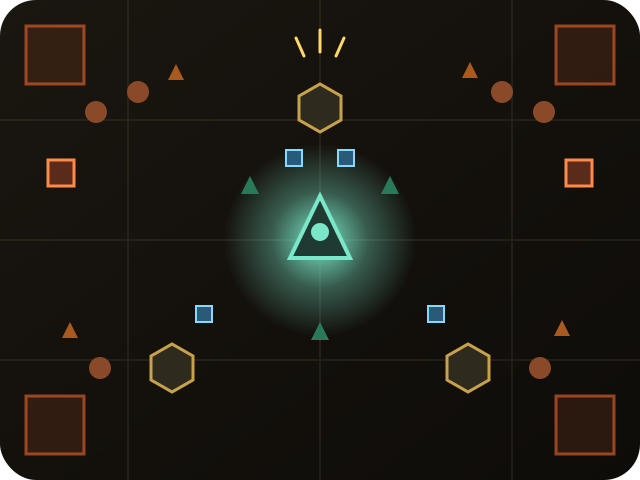 Strategy
Guard a beacon and three outposts against six waves of machine raiders, drafting autonomous squads and turning fights with rally, shockwave and repair skills.
If the appeal of a soulslike is reading danger before committing, a compact boss rush can isolate that skill. Only Soul Keeper in this selection directly shares stamina between attacks and rolls. Ember Vault keeps ground telegraphs while making the basic shot automatic. Last Banner is an adjacent recommendation: its boss climax comes from defending a beacon with recruited squads. Including it does not make it the same kind of duel. These independent games are not official entries in another series, and the comparison does not promise open worlds, online cooperation or the complete systems of a commercial action RPG.
Soul Keeper is a five-boss rush built on one shared resource: stamina. Every sword swing costs 25, every roll costs 30, and the bar only refills after a short delay, so greed is punished harder than anywhere else. Each boss — Ashen Squire, Twin Fangs, Bell Warden, Mirror Duelist and The Hollow King — telegraphs its attacks in red: a cone for the arc swing, a lane for the dash, a circle for the expanding shockwave ring. Rolling grants invincibility frames, so the correct answer to every telegraph is a roll through or away, followed by one or two punished swings while the boss recovers. At half health each boss enters phase two: faster movement, shorter telegraphs and an expanded moveset. Death costs one of three embers and spills all your souls as a stain where you fell; beat the same boss again and walk over the stain to reclaim them. Felling a boss pays souls, restores 30 HP and refills your three flasks. Clear all five to open the vault; burn all three embers and the run is over.
Fight at the edge of the boss's arc range: close enough that one step in lands a swing, far enough that the telegraph cone never touches you. Never empty the stamina bar — always keep 30 in reserve so a surprise telegraph cannot catch you unable to roll. Two swings per opening is the safe rule; three is greed, and the third swing is what kills most runs. Against Bell Warden's ring, roll through the band as it reaches you rather than outrunning it — the ring outpaces walking speed near its full radius. Twin Fangs and the Mirror Duelist dash in straight lanes, so sidestep perpendicular, not backward. Save flasks for phase two: the first half of every fight is predictable enough to fight clean. When you die carrying souls, play the rematch defensively until the stain is reclaimed — dying twice costs everything.
Ember Vault is a boss-rush action roguelite set in a sealed, ember-lit ruin drawn on an isometric tile floor. Five wardens stand between you and the vault's heart — the Cinder Warden, the Ashweaver, the Magma Herald, the Obsidian Choir, and finally the Ember Sovereign — and you fight them one after another in a single run of roughly five to seven minutes. Your basic attack is automatic: ember bolts stream toward the boss on their own, so your real job is positioning. Every boss attack is announced by a glowing telegraph on the ground before it lands, and each warden enrages at half health with faster, heavier patterns. After every kill the vault offers a choice of two relics; you keep one, and the bonuses stack for the rest of the run. If your health reaches zero the run ends, and killing the final boss unseals the vault. Because runs are seeded, a failed attempt is information: the same wardens, telegraph timings, and relic offers will be there next time, waiting for a better plan.
Learn each telegraph's timing instead of reacting to the flash: cones and meteors punish standing still, rings punish standing anywhere unless you dash through the band, and the sweeping beam always shows its rotation direction with a short gold hint line — run against the sweep, not with it. Save Stone Aegis for enrage phases, when cooldowns shrink and overlapping patterns leave few safe tiles. Dash aggressively through ring novas rather than walking the long way around; the invulnerability window is generous and the recharge is short. For relics, Kindled Coil and Heavy Slingstone multiply your constant bolt damage, Emberbrand keeps burning while you focus on dodging, and Wardstone Heart quietly forgives one mistake every twelve seconds. Stay near mid-range: close enough that Flare Burst connects, far enough to read the next marker.
Last Banner drops you into a rusted mechanical wasteland where one glowing beacon and three outposts are all that remain of your expedition. Every thirty seconds the enemy signal grows stronger: machine husks march from four corner gates in five escalating waves, capped by a colossal siege engine that slams the ground and spawns reinforcements of its own. A full run lasts roughly six to seven minutes. You never pull a trigger — the commander and every drafted soldier acquire targets and fight automatically. Your job is the strategy layer: where the commander stands, which squads you recruit with scavenged supply, and when you spend three powerful active skills. If the beacon's integrity reaches zero the run is lost; bring down the Siege Colossus in wave six and the banner stands. Because drafts arrive on a fixed thirty-second rhythm, the whole run can be read as a series of timed decisions rather than a reaction test.
Read the wave banner and pre-position: rushers beeline for the beacon while brutes batter whichever post is closest, so anchor guards where the next gate cluster actually points. The commander is your free seventh unit — body-block rushers with shockwave ready rather than chasing grubs across the map. Save Emergency Repair for the Colossus fight; its ground slams telegraph for a full second, and a rebuilt outpost splits the horde's targeting. Rally is strongest the moment a wave spawns, when your whole line is in contact. Draft to your weakness: if posts are crumbling take engineers, if soldiers are falling take a medic, and if raiders leak through take archers before more guards. Skipping a weak draft with Escape is a legitimate play when your supply can buy a decisive card one cycle later.
Choose Soul Keeper to practise a small punish while reserving enough stamina to escape. Choose Ember Vault if you want to watch the floor without coordinating a basic attack button. Choose Last Banner if recruitment and protecting a fixed objective sound more interesting than a personal duel.
Watch one complete warning, where its attack actually lands and the recovery afterwards. Then change one variable: initial distance, exit direction or ability timing. A boss entering its second phase can invalidate an answer that worked earlier, so a clean opening is useful information rather than a guarantee. Mouse, keyboard and touch distribute attention differently; begin with controls that let you see danger while reaching the important action. The game-specific sections distinguish the rules instead of treating every dark arena or final boss as evidence of an identical combat system.